
Now Reading: Top Innovations in AI and CNC Machining Trends for Engineers
-
01
Top Innovations in AI and CNC Machining Trends for Engineers

The manufacturing world is undergoing a major transformation driven by automation, data intelligence, and smart systems. Among these changes, AI and cnc machining trends are reshaping how engineers design, produce, and optimize components with greater precision and efficiency. What once required manual programming and constant supervision is now increasingly autonomous, adaptive, and predictive.
This article explores the top innovations that are redefining CNC machining through artificial intelligence, helping engineers stay ahead in a highly competitive industrial landscape.
AI-Powered Predictive Maintenance in CNC Systems
Predictive maintenance is one of the most impactful developments in modern manufacturing. Instead of waiting for machines to fail, AI systems now analyze data from CNC machines to predict when maintenance is needed. This reduces downtime and prevents costly breakdowns.
In the context of AI and cnc machining trends, predictive maintenance is becoming a standard feature in smart factories. Sensors collect real-time data such as vibration, temperature, and spindle performance, which AI models use to detect anomalies before they become critical issues.
Key innovations include:
- Real-time machine health monitoring using IoT sensors
- AI algorithms predicting tool wear and failure
- Automated maintenance scheduling systems
- Reduced unplanned downtime and repair costs
- Improved machine lifespan and productivity
By integrating predictive analytics, engineers can shift from reactive maintenance to a proactive strategy. This not only improves efficiency but also ensures smoother production cycles with fewer interruptions.
As CNC machines become smarter, predictive maintenance is expected to evolve further, incorporating deep learning models that continuously improve accuracy over time.
Generative Design and AI-Assisted Engineering
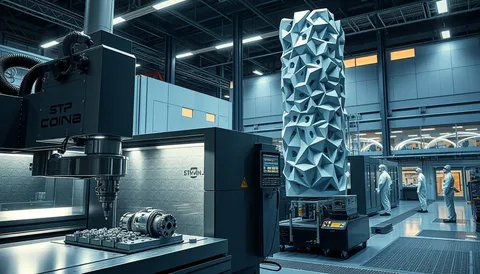
Generative design is revolutionizing how engineers approach product development. Instead of manually designing components, engineers input design goals and constraints, and AI generates multiple optimized solutions.
This is one of the most transformative AI and cnc machining trends, enabling faster innovation cycles and highly efficient part designs that reduce material usage while maintaining strength.
Key innovations include:
- AI-generated CAD models based on performance requirements
- Lightweight structures with optimized geometry
- Faster prototyping and design iteration
- Reduced material waste through optimized designs
- Integration with CNC toolpath generation
Generative design allows engineers to explore thousands of design possibilities in minutes. This significantly reduces the time spent on trial-and-error processes and enhances creativity in engineering workflows.
As CNC machining systems integrate directly with generative design tools, production becomes seamless—from concept to finished part with minimal human intervention.
Smart CNC Automation and Adaptive Machining
Smart automation is another key area transforming CNC machining. Modern machines are now capable of adjusting cutting parameters in real time based on material conditions and tool performance.
Within AI and cnc machining trends, adaptive machining ensures higher precision and consistency by continuously optimizing feed rates, spindle speeds, and tool paths during operation.
Key innovations include:
- Real-time adjustment of machining parameters
- AI-driven toolpath optimization
- Automatic compensation for material inconsistencies
- Reduced human intervention in machining processes
- Increased production speed and accuracy
Adaptive machining reduces errors caused by variations in raw materials or tool wear. This leads to better surface finishes and more consistent product quality across production batches.
As automation advances, engineers are increasingly relying on AI systems that can independently manage entire machining cycles with minimal supervision.
Digital Twins for CNC Simulation and Optimization
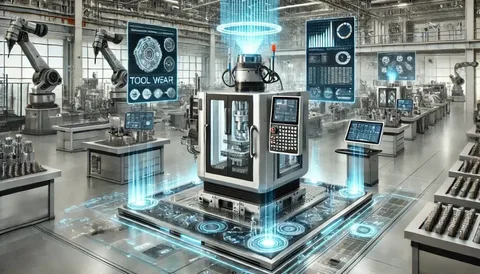
Digital twin technology is becoming a game-changer in CNC machining. A digital twin is a virtual replica of a physical machine that allows engineers to simulate and optimize operations before actual production begins.
This is a critical development in AI and cnc machining trends, as it enables engineers to test machining strategies, detect potential issues, and improve efficiency without wasting physical resources.
Key innovations include:
- Virtual simulation of CNC machining processes
- Real-time synchronization with physical machines
- Error detection before actual production
- Performance optimization through simulation testing
- Reduced material waste and production costs
Digital twins help engineers visualize the entire machining process, identify inefficiencies, and refine toolpaths in a virtual environment. This significantly reduces the risk of errors during actual production.
As AI integration improves, digital twins are expected to become fully autonomous systems capable of self-optimizing machining operations in real time.
AI-Enhanced Quality Control and Inspection Systems
Quality control is a critical aspect of manufacturing, and AI is transforming how inspections are conducted in CNC machining. Traditional manual inspections are being replaced by automated vision systems and machine learning algorithms.
In modern AI and cnc machining trends, AI-based inspection systems ensure higher accuracy, faster detection of defects, and consistent product quality.
Key innovations include:
- Computer vision systems for defect detection
- AI-based measurement and dimensional analysis
- Real-time quality monitoring during production
- Automated rejection of defective parts
- Data-driven quality improvement insights
AI-powered inspection systems can detect even microscopic defects that may be missed by human inspectors. This leads to higher product reliability and reduced waste.
With continuous learning capabilities, these systems improve over time, making quality control more efficient and precise in large-scale manufacturing environments.
Conclusion
The rapid evolution of AI and cnc machining trends is transforming the manufacturing industry into a highly intelligent, automated, and efficient ecosystem. From predictive maintenance and generative design to digital twins and AI-driven quality control, each innovation is contributing to smarter production systems.
For engineers, embracing these technologies is no longer optional—it is essential for staying competitive in a fast-changing industrial landscape. As AI continues to evolve, CNC machining will become even more autonomous, precise, and optimized, driving the next wave of industrial innovation.