Now Reading: Why do some IPTV providers ask for ID verification?
-
01
Why do some IPTV providers ask for ID verification?

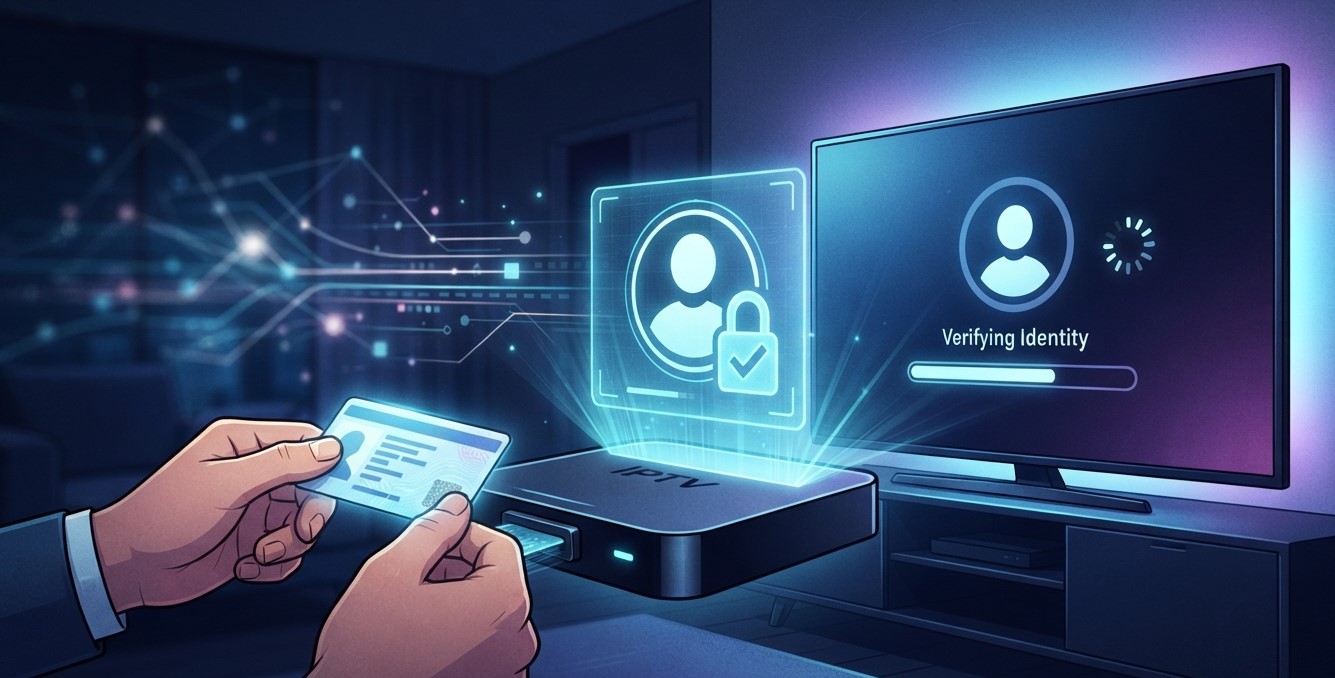
If you have ever tried to sign up for an IPTV service and were asked to verify your identity, you may have wondered why an entertainment service needs your ID.
After all, IPTV is generally associated with watching television over an internet connection. Why would a provider need information such as your name, date of birth, address, phone number, or government-issued identification?
The answer depends on the provider, the country where it operates, its payment process, the type of service it offers, and its compliance requirements.
For users researching IPTV India, an ID verification request can therefore be legitimate in some circumstances, but it is also something that should be handled carefully. An Indian IPTV Box itself does not normally require you to provide an ID simply because it is an IPTV device. Identity verification is generally connected to the service provider or a related payment, account, security, or age-verification process.
Identity verification is commonly used by online businesses to confirm that customers are who they claim to be, reduce fraud, and meet applicable legal or regulatory requirements.
Table of Contents
- What Is ID Verification?
- Why Would an IPTV Provider Ask for ID?
- Fraud Prevention and Account Security
- Payment Verification
- Age Verification
- Regulatory and Compliance Requirements
- Why Verification May Be Requested During Signup
- Is It Safe to Send Your ID to an IPTV Provider?
- What Should You Check Before Submitting an ID?
- What Information Should a Provider Explain?
- Red Flags to Watch For
- Does an Indian IPTV Box Require ID Verification?
- Frequently Asked Questions
- Final Thoughts and CTA
1. What Is ID Verification?
ID verification is a process used to confirm that a person is who they claim to be.
Depending on the organization and the purpose of the check, verification may involve:
- Name verification
- Date-of-birth verification
- Address information
- Phone or email verification
- Government-issued identification
- Passport or driver’s license
- A selfie or facial verification
- Payment information
Not every verification process requires an actual government-issued ID.
Some services may simply verify an email address or phone number, while higher-risk situations may involve official identification documents or additional checks.
The important question is why the provider is asking for the information and whether the amount of information requested is appropriate for that purpose.
2. Why Would an IPTV Provider Ask for ID?
There is no single reason that applies to every IPTV provider.
Some possible reasons include:
Fraud Prevention
Online businesses can face fraudulent accounts, stolen payment information, account takeovers, and other forms of abuse.
Identity verification can help a business determine whether the person creating an account is actually the person they claim to be. Stripe describes customer identity verification as a tool businesses can use to prevent fraud and protect accounts.
Account Security
A provider may use additional verification when an account involves sensitive information or unusual activity.
For example, a provider might request verification if:
- An account is being recovered.
- Payment details have changed.
- Unusual login activity is detected.
- A customer requests a sensitive account change.
- The provider needs to confirm account ownership.
Age Verification
Some services may need to determine whether a customer meets a particular age requirement.
Age-assurance systems can range from simple declarations to more intensive identity checks. The appropriate approach depends on the service and the risk involved.
Legal or Regulatory Compliance
Certain businesses and payment-related activities can be subject to identity, fraud-prevention, or other compliance requirements.
However, not every IPTV subscription automatically requires government ID. The provider should be able to explain the reason for its particular verification process.
3. Fraud Prevention and Account Security
Fraud prevention is one of the most common reasons businesses use identity verification.
Imagine someone creates an account using another person’s payment details. Without appropriate security measures, the business could potentially experience:
- Unauthorized transactions
- Chargebacks
- Account abuse
- Identity-related fraud
- Multiple fraudulent accounts
Identity verification can add another layer of protection.
Payment and identity systems can use multiple signals to identify potentially suspicious activity, including account information, payment information, device characteristics, and transaction behavior.
For legitimate customers, this may sometimes create an additional step during signup, but it can also help protect accounts and transactions.
4. Payment Verification
An IPTV provider may request additional information when there is a payment-related concern.
For example, a payment processor might identify a transaction as requiring additional verification because of unusual activity.
This does not necessarily mean that the customer has done anything wrong.
Fraud-prevention systems can sometimes reject or flag legitimate transactions because automated systems cannot always distinguish perfectly between genuine and suspicious activity.
A provider may therefore use identity verification to establish that:
- The customer is a real person.
- The account belongs to the person making the purchase.
- Payment activity is consistent with the account.
- The transaction is less likely to involve unauthorized payment information.
If verification is being requested specifically during checkout, look for an explanation from the payment processor or provider before submitting sensitive documents.
5. Age Verification
Age verification is another possible reason for an ID request.
Some online services may have age-related restrictions or responsibilities depending on the content they provide and the jurisdiction in which they operate.
Verification methods can include:
- Self-declaration
- Date-of-birth checks
- Third-party age verification
- Identity documents
- Other age-assurance technologies
The ICO notes that businesses should use an age-assurance approach proportionate to the circumstances and should limit the personal information collected to what is necessary for the stated purpose.
This means a provider requesting age verification should explain what it is checking and why.
6. Regulatory and Compliance Requirements
Some businesses operate under laws or regulations that require customer verification.
For example, financial services commonly have formal Know Your Customer (KYC) and anti-money-laundering requirements.
However, it is important not to assume that every IPTV provider is legally required to perform KYC simply because it sells IPTV subscriptions.
Requirements vary according to:
- Country
- Business structure
- Payment provider
- Services offered
- Customer location
- Applicable regulations
- Type of transaction
If an IPTV provider claims that ID verification is legally required, you can reasonably ask which requirement applies and why the information is needed.
A transparent provider should be able to explain its verification process.
7. Why Verification May Be Requested During Signup
An IPTV provider may request verification at different stages.
During Account Creation
The provider may want to establish that a new customer is genuine.
Before Payment
Verification can sometimes be used as part of fraud-prevention procedures.
After Payment
A transaction may trigger additional checks after it has been submitted.
When Changing Account Details
A provider may want to verify the account owner before changing sensitive information.
When Recovering an Account
If you lose access to your account, the provider may need to establish that you are the legitimate account holder.
The exact process varies between services.
8. Is It Safe to Send Your ID to an IPTV Provider?
This is an important question.
Do not automatically send your government ID to every website that asks for it.
Before providing sensitive personal information, investigate the provider and understand its verification process.
A responsible organization should be able to explain:
- Why the ID is required.
- What information is collected.
- Who processes the information.
- Whether a third-party verification company is involved.
- How long the information is retained.
- How the information is protected.
- Whether the information is used for another purpose.
Data-protection principles emphasize purpose limitation and data minimization. Organizations should have a clear reason for collecting personal information and should avoid collecting more information than necessary for that purpose.
Look for a Privacy Policy
Before submitting an ID, read the provider’s privacy policy.
Pay attention to sections covering:
- Personal information
- Identity verification
- Third-party processors
- Data retention
- Security
- Data sharing
- User rights
A provider that cannot clearly explain how your ID will be handled deserves additional caution.
9. What Should You Check Before Submitting an ID?
Take a few minutes to evaluate the request.
Check the Website Address
Make sure you are using the provider’s legitimate website rather than a suspicious copycat domain.
Look for HTTPS
The website should use a secure HTTPS connection, although HTTPS alone does not prove that a website is trustworthy.
Read the Privacy Policy
Find out how your information will be used and stored.
Understand the Purpose
Ask why the provider needs your ID.
A legitimate verification process should have a specific purpose.
Check Whether a Third Party Performs the Verification
Some organizations use specialist identity-verification providers rather than storing all verification information themselves.
The ICO notes that third-party verification services can be used for age assurance and may reduce the amount of personal information an organization needs to collect directly.
Avoid Sending ID Through Unsecured Channels
Be especially cautious if someone asks you to send a government ID through an unexpected social-media message or an informal chat account.
Use the provider’s official verification process whenever possible.
10. What Information Should a Provider Explain?
If a provider asks for sensitive information, you should understand the purpose of the request.
A good explanation should cover:
Why:
Why does the provider need verification?
What:
What information or documents are required?
Who:
Who will process or access the information?
How long:
How long will the information be retained?
Security:
How will the information be protected?
Use:
Will the information be used only for verification, or for another purpose?
Privacy guidance emphasizes that people should be informed about why personal information is collected and how it will be used.
11. Red Flags to Watch For
Not every ID request is suspicious, but certain situations should make you stop and investigate.
The Provider Cannot Explain Why It Needs Your ID
If the only answer is “send it because we need it,” ask for a clearer explanation.
The Provider Requests Excessive Information
A provider should not automatically require every piece of personal information available.
Data minimization means information should be adequate, relevant, and limited to what is necessary for the stated purpose.
The Request Comes Through an Unofficial Account
Be cautious if someone contacts you through an unexpected social-media account and asks for your passport, driver’s license, or other sensitive information.
You Are Asked for Passwords or Banking Credentials
A provider should never need your online banking password or similar secret credentials simply to verify your identity.
There Is No Privacy Policy
A lack of clear information about how personal data is handled is a significant reason to reconsider sharing sensitive documents.
Pressure or Urgency
Be cautious if someone tells you that you must immediately send your ID or lose your account, particularly if the request arrives unexpectedly.
12. Does an Indian IPTV Box Require ID Verification?
Generally, an Indian IPTV Box itself does not require identity verification simply because it is an IPTV device.
The box is hardware.
Whether you need to provide ID depends on the service, application, payment process, or provider you are using.
For example:
Indian IPTV Box → IPTV application → Service provider
The verification request would normally come from the service or related account process rather than from the physical box itself.
If you are researching IPTV India, therefore, don’t assume that buying or using an IPTV box automatically means you must provide government identification.
Instead, evaluate the specific service and understand why it is requesting verification.
13. Frequently Asked Questions
Why does an IPTV provider need my ID?
Possible reasons include fraud prevention, account security, age verification, payment verification, or applicable compliance requirements. The exact reason depends on the provider and circumstances.
Is ID verification normal for IPTV?
It can occur, but it is not an automatic requirement for every IPTV service. A provider requesting ID should explain the purpose of the verification.
Does IPTV India require ID verification?
There is no universal rule that every IPTV India service requires government ID. Verification requirements depend on the particular provider, service, payment system, and applicable requirements.
Does an Indian IPTV Box need an ID?
No. An Indian IPTV Box is a hardware device and does not inherently require identity verification. The service you use with the device may have its own account-verification requirements.
Is it safe to upload my passport to an IPTV provider?
Only consider doing so after verifying that the provider is legitimate, understanding why the document is needed, and reviewing its privacy and data-retention practices.
Can an IPTV provider legally ask for my ID?
Whether a provider is permitted or required to request particular information depends on the applicable laws and circumstances. A provider should be transparent about the purpose of the request.
What if an IPTV provider asks for too much personal information?
Ask why each piece of information is necessary. Privacy principles support collecting only information that is adequate, relevant, and necessary for the stated purpose.
Can an IPTV provider use my ID for marketing?
You should check the provider’s privacy policy and terms. The purpose for collecting personal information should be clear, and organizations should not use information for unrelated purposes without an appropriate basis.
Can I refuse ID verification?
You can ask the provider why verification is required and what alternatives, if any, are available. If verification is genuinely necessary for the service, refusing it may mean the provider cannot complete the account or transaction.
Why does a provider ask for a selfie with my ID?
Some identity-verification systems use facial or biometric comparison to establish that the person presenting the document is the same person represented by it.
14. Final Thoughts
An IPTV provider may ask for ID verification for several legitimate reasons, including fraud prevention, account security, payment verification, age assurance, or compliance requirements.
However, an ID request should not automatically be treated as safe simply because it appears on an IPTV website.
If you are considering an IPTV India service, take time to understand why verification is required, what information will be collected, who will process it, and how long it will be retained.
The same applies when using an Indian IPTV Box. The hardware itself does not normally require your personal identification. Any verification requirement generally comes from the IPTV service, account system, payment provider, or another related service.
Most importantly, never share sensitive identification documents without first checking the legitimacy of the provider and understanding how your information will be handled. Privacy principles such as purpose limitation and data minimization are useful benchmarks when evaluating any request for personal information.
CTA
Looking for reliable information about IPTV services, subscriptions, devices, and setup? Before choosing an IPTV India service, review its account requirements, privacy policy, payment process, and supported devices. If you plan to use an Indian IPTV Box, make sure the provider is transparent about its verification requirements and handles customer information responsibly.