Now Reading: Why Professional Foundation Specialists Matter for Every Construction Project
-
01
Why Professional Foundation Specialists Matter for Every Construction Project

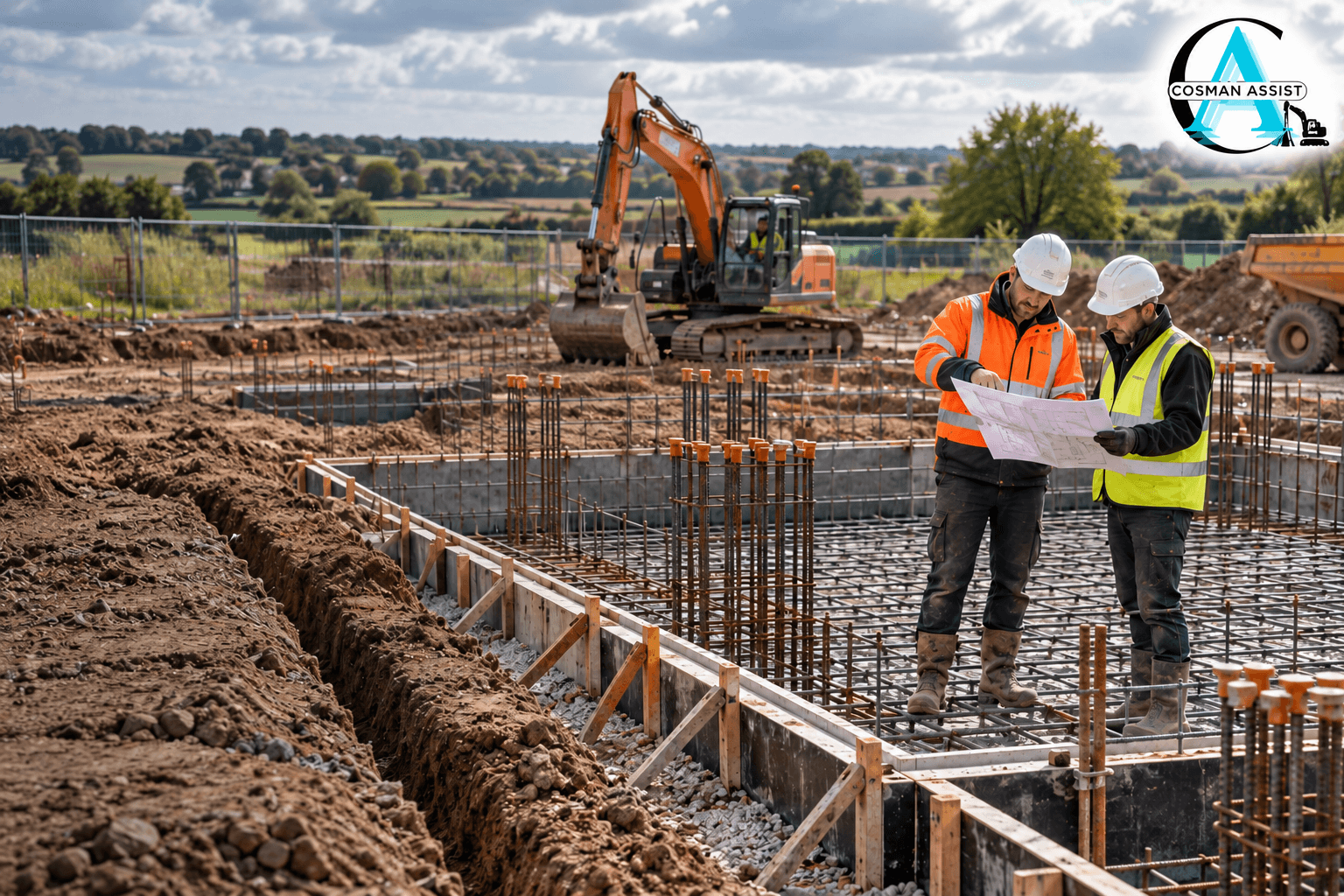
Every successful building begins with a stable and correctly installed foundation. Whether the project involves a commercial property, industrial facility, public building or residential development, the quality of the foundation affects the safety, durability and performance of the entire structure.
Foundation construction requires much more than excavating ground and pouring concrete. Contractors must understand engineering drawings, soil conditions, structural loads, drainage requirements and the relationship between below-ground services. Small inaccuracies during this stage can lead to settlement, cracking, alignment problems and costly corrective work later.
Working with experienced foundation professionals helps ensure that every stage is properly planned, coordinated and completed according to the approved design.
Why Foundations Are Critical to Structural Stability
A foundation transfers the weight of a building into the ground beneath it. It must distribute structural loads safely while responding to the conditions of the site. If the foundation is unsuitable for the soil or incorrectly installed, movement may occur as the building settles.
The effects of poor foundation work are not always visible immediately. Cracks, uneven floors, sticking doors and structural movement can develop over time. In severe cases, remedial work may require extensive excavation, underpinning or reconstruction.
Correct foundation installation provides a dependable base for the structure above. It also helps subsequent trades complete their work accurately because walls, columns, floors and structural frames rely on the levels and positions established during the substructure phase.
Understanding the Ground Before Construction Begins
No two construction sites are exactly the same. Soil composition, moisture levels, previous land use, nearby buildings, vegetation and underground services can all affect foundation planning.
Ground investigation information allows engineers and contractors to understand the conditions below the surface. This information can identify weak soils, made ground, groundwater and other factors that may influence the foundation design.
The contractor must then follow the structural and geotechnical information provided for the project. Excavation depth, formation level, foundation width, concrete specification and reinforcement details should all correspond with the approved plans.
Unexpected ground conditions may still be discovered during excavation. When this happens, clear communication between the contractor, engineer and project team is essential before foundation construction proceeds.
Choosing the Appropriate Foundation System
The most suitable foundation system depends on the building design, structural loads and site conditions. Traditional strip foundations may be appropriate for certain load-bearing structures, while trench-fill foundations can reduce the amount of below-ground masonry required.
Pad foundations are commonly used beneath individual structural columns. Reinforced concrete ground beams may connect foundation points and distribute loads across the site. More demanding developments may require pile caps, reinforced bases or specially engineered foundation arrangements.
The contractor’s responsibility is to build the specified system accurately rather than make assumptions about what the project requires. Dimensions, levels, reinforcement and concrete placement must reflect the approved engineering details.
Clients planning projects in the region can work with experienced foundation specialists bedfordshire to support accurate, safe and specification-led foundation construction.
What Happens During Foundation Installation?
Foundation work normally begins after the site has been cleared, prepared and safely organised. Setting out is completed using the project drawings so that excavation can follow the required lines, dimensions and levels.
The ground is then excavated to the specified formation. Contractors must carefully manage plant movement, excavation stability, water ingress and existing services throughout this process. The formation is inspected before blinding concrete, shuttering or reinforcement is installed.
Steel reinforcement may include mesh, cages, starter bars and other components shown in the structural details. These elements must be positioned accurately and given the correct concrete cover.
Before concrete is placed, the work should be checked against the relevant drawings and specifications. Concrete placement, compaction, finishing and curing must then be managed carefully to achieve the intended structural performance.
The Importance of Accurate Reinforcement
Reinforcement allows concrete foundations to resist tensile forces and manage structural stresses. Its effectiveness depends on correct bar sizes, spacing, laps, connections and positioning.
Incorrectly installed reinforcement can weaken a foundation even when the finished concrete appears satisfactory. Bars that move during placement, insufficient concrete cover and inaccurate starter positions may all affect structural performance.
Holding-down bolts and starter bars require particular attention because they connect the foundation to structural elements above. Positioning errors can cause significant problems when steel frames, walls or columns are installed.
Experienced groundwork teams use controlled checks before concrete placement. Identifying an issue at this stage is considerably easier and less expensive than correcting it after the foundation has been poured.
Coordinating Foundations With Drainage and Utilities
Foundations often share the below-ground environment with drainage pipes, utility routes, service ducts and other infrastructure. These elements must be coordinated to avoid physical clashes and unnecessary re-excavation.
A drainage route that conflicts with a foundation can delay the programme and require revised details. Similarly, installing services without considering future structural work may create access problems or expose completed infrastructure to damage.
Early coordination helps the project team establish an efficient construction sequence. Drainage crossings, service penetrations and utility corridors can be reviewed before work reaches a critical stage.
Using a contractor with broader groundworks and civil engineering capabilities can simplify this process. One coordinated team can understand how foundations, drainage, utilities, reinforced concrete and external works interact across the complete project.
Quality Control During Foundation Construction
Quality control should continue throughout foundation installation rather than being treated as a final inspection. Excavation dimensions, formation levels, reinforcement arrangements and concrete specifications all need to be verified at the appropriate stage.
Once concrete has been placed, many important elements are permanently concealed. Photographic records, inspection documents and accurate site information can provide evidence that work was completed according to the design.
Digital monitoring and organised reporting also help project managers track progress and identify outstanding actions. Clear records are particularly valuable on commercial, industrial and public-sector developments where several contractors and stakeholders may be involved.
A structured quality process reduces uncertainty, supports accountability and gives clients greater confidence in the completed foundation system.
Safety Requirements for Foundation Work
Foundation construction involves open excavations, heavy machinery, lifting operations, steel reinforcement and concrete deliveries. Each activity introduces risks that must be assessed and controlled.
Safe access should be maintained around excavations, and plant movements must be carefully coordinated. Excavation stability, underground services and changing ground conditions require continuous attention. Reinforcement can also create hazards if exposed bars are not appropriately managed.
Reliable contractors use trained personnel, suitable supervision and project-specific working methods. Toolbox talks, plant checks and clear communication help ensure that everyone understands the planned activities and site controls.
Strong safety management protects workers while also supporting productivity. A well-organised site is less likely to experience preventable incidents, disruption or damage to completed work.
Benefits of Hiring an Experienced Regional Contractor
A regional foundation contractor can provide valuable practical knowledge about local access conditions, supply arrangements and common construction requirements. Proximity may also make it easier to coordinate site visits, labour, plant and material deliveries.
Experience across different project types is equally important. Commercial and public-sector developments may involve strict programmes, live environments and detailed reporting requirements. Industrial projects can require complex structural bases and coordinated underground infrastructure.
An experienced contractor understands how to work within these conditions while maintaining communication with principal contractors, engineers and other trades.
Cosman Assist provides foundation, groundwork and civil engineering services across Bedfordshire, Buckinghamshire, Oxfordshire and Hertfordshire. Its wider capabilities allow foundation packages to be coordinated with site preparation, drainage, utilities, concrete and external works.
How to Select a Foundation Contractor
Clients should evaluate more than price when selecting a foundation contractor. Experience, competence, safety performance, quality procedures and the ability to understand technical information all influence the final result.
A suitable contractor should review structural drawings, specifications, site information and programme requirements before confirming its approach. The quotation should clearly define the included work, responsibilities and any assumptions.
Communication is another important consideration. Foundation activities frequently require coordination with engineers, surveyors, concrete suppliers and other site teams. A contractor that raises questions early can help prevent misunderstandings from becoming expensive problems.
Relevant accreditations and recognised safety standards can provide additional reassurance that the contractor operates through established, independently assessed processes.
Building Long-Term Value From the Ground Up
Foundation work represents an early stage of construction, but its influence continues throughout the life of the building. Accurate installation supports structural stability, improves coordination and reduces the likelihood of future repairs.
Investing in professional foundation services can also protect the wider construction programme. When excavation, reinforcement, concrete and associated groundwork are completed correctly, subsequent trades can proceed with greater confidence.
Cosman Assist combines over 20 years of industry experience with modern construction processes to deliver dependable foundation and groundwork solutions. The company supports commercial, industrial, public-sector and specialist developments with a focus on precision, safety and compliant delivery.
Selecting the right foundation team is ultimately an investment in the performance of the complete project. With careful planning, experienced supervision and controlled workmanship, a strong foundation creates the conditions for everything above it to succeed.