Now Reading: Best Snow Cleaning: 7 Critical Safety Tips for Winter
-
01
Best Snow Cleaning: 7 Critical Safety Tips for Winter

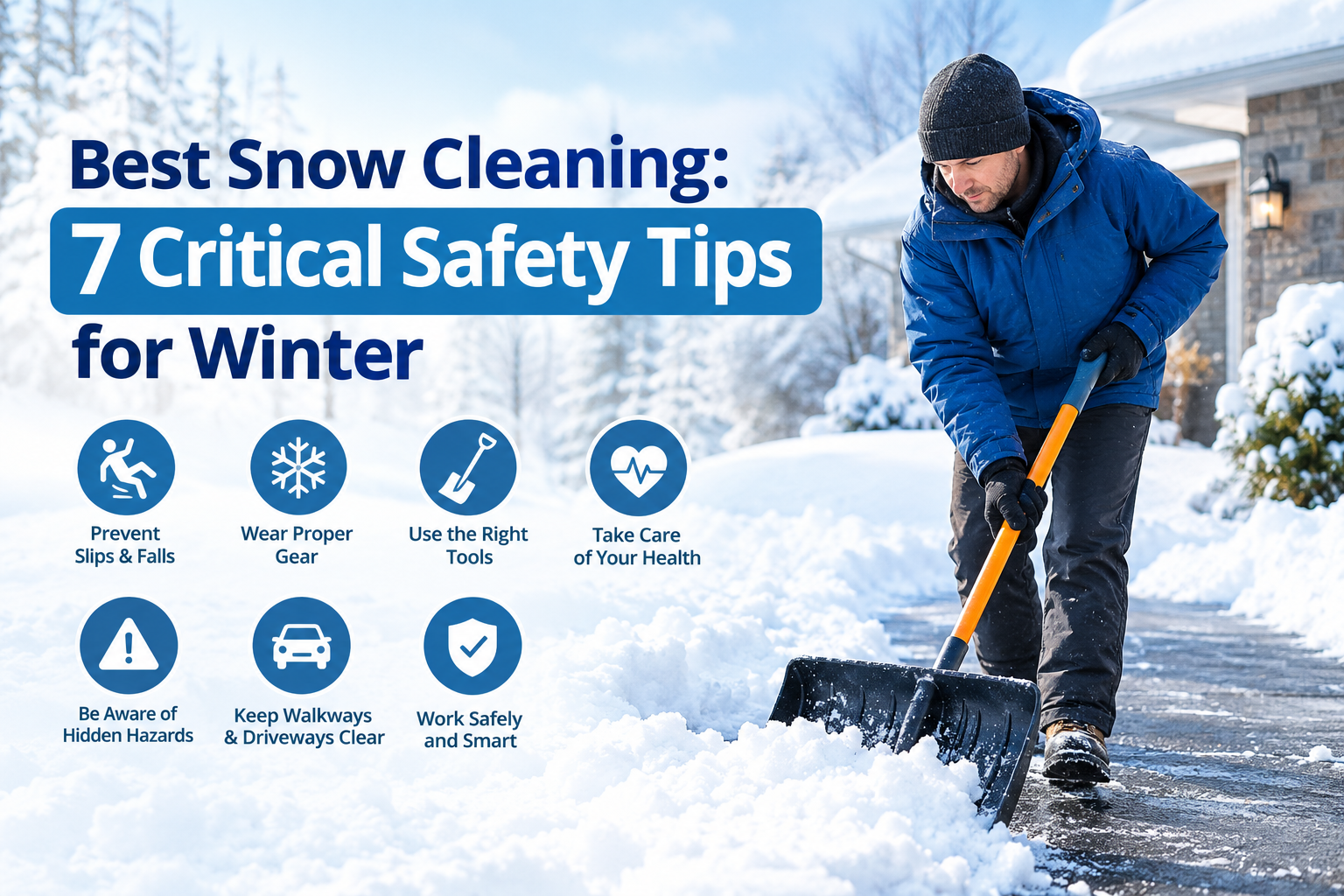
The most dangerous surface on any property in winter is rarely deep snow. It is the thin, invisible layer of ice that formed overnight on a path someone cleared badly the day before.
Good snow cleaning is largely sequence and timing. Clear before snow compacts, treat before surfaces refreeze, and check again once temperatures drop after dark. Get that order wrong and you can make a surface more hazardous than if you had left it alone.
These seven tips cover preparing a property before winter, clearing and treating surfaces safely, the mistakes that create black ice, and when professional snow clearing services become the sensible option rather than an expensive convenience.
Why Snow and Ice Safety Matters in Winter
Slips on ice happen in predictable places: entrances, steps, shaded paths, and the point where a cleared surface meets an untreated one.
For homeowners the consequence is usually personal — an injury to a family member, visitor or delivery driver.
For businesses the exposure is broader. Occupiers’ liability places a duty on those controlling premises to take reasonable care for the safety of lawful visitors, and employers have obligations around safe access to the workplace. A site that could reasonably have anticipated ice and did nothing is in a weak position; one following a documented winter maintenance plan is not.
There is an access dimension too. Blocked car parks, impassable yards and untreated pedestrian routes stop a business operating regardless of whether anyone is hurt.
1. Prepare Your Property Before Snow Arrives
What to do: Walk the property in autumn and fix what winter will expose. Repair cracked or uneven surfaces, clear drainage gullies and gutters, check outdoor lighting, and stock de-icing material before supplies run short.
Why it matters: Blocked drainage is the most common cause of standing water that becomes ice. Water that cannot escape sits on a surface, freezes overnight, and creates a hazard in the same place every cold night.
Identify problem areas while you can see them: north-facing paths that never catch sun, shaded steps, slopes, and anywhere water pools after rain. These freeze first and thaw last.
Common mistakes: Leaving repairs until spring, so freeze-thaw widens cracks all winter. Buying salt after the first snowfall, when stock has gone.
For commercial sites, this is also when to survey access routes, agree where cleared snow can be stacked, and confirm priorities.
2. Clear Snow as Early as Possible
What to do: Clear fresh snow the same day it falls, ideally in the morning. Removing the top layer early allows any daytime sun to work on what remains, and you can then treat the surface before nightfall.
Why it matters: Fresh, loose snow shifts easily. The same snow walked on and driven over compacts into ice that must be broken rather than swept. On a busy commercial site, that transition can happen within an hour of opening.
Common mistakes: Waiting to see whether it will thaw naturally. Clearing a narrow channel down a wide path, which leaves untreated edges that refreeze and catch people stepping aside. Clearing once and not rechecking after dark, when a damp surface becomes an icy one.
Prioritise in this order: main entrances, then vehicle access, then steps, then secondary paths and service routes.
3. Use the Right Snow Plough and Removal Equipment
What to do: Match equipment to the area. A wide plastic snow shovel handles a domestic path or driveway; a snow plough, a blade mounted to a vehicle that pushes snow aside in one pass, is the practical option for car parks, access roads, yards and long driveways.
Why it matters: Using the wrong tool is how people injure themselves. A garden spade moves a fraction of what a snow shovel does for the same effort, and attempting a commercial car park by hand is neither safe nor realistic.
Common mistakes: Setting a plough blade too low, so it catches manhole covers, drainage channels, kerbs and speed bumps. Ploughing a site without knowing where those obstacles sit. Piling snow across a drainage gully, in front of accessible bays, or where it blocks sightlines at an exit. Decide in advance where ploughed snow goes, since stacked snow melts and refreezes across whatever is downhill.
On hand clearing technique: push snow rather than lifting it wherever possible, since pushing puts far less strain on the back. When you must lift, bend the knees, keep the load close, and turn your feet rather than twisting.
4. Use Salt Spreading and De-Icing Correctly
What to do: Apply salt to a cleared surface, ideally before nightfall to stop overnight refreezing. Pre-treating before forecast snow also helps, since it stops snow bonding to the surface and makes clearance easier.
Why it matters: Salt lowers the freezing point of water, so a treated surface stays wet rather than icing. It is preventative more than curative, which is why timing determines whether it works at all.
For a cleared domestic path, government guidance suggests around a tablespoon of ordinary table or dishwasher salt per square metre. Steps and steep sections warrant more, as these carry the highest slip risk.
Where salt has limits: it achieves little spread over deep snow, because it cannot reach the surface — clear first, then treat. Its effectiveness also falls as temperatures drop, generally becoming much less effective below around minus ten degrees. In those conditions, sand or ash will not de-ice but does provide grip, which is often what actually matters.
The risks of over-salting, which few articles mention:
- Salt damages lawns, planting and borders where it washes off paths
- Repeated heavy application can affect concrete, paving and metalwork over time
- Runoff carries into drainage and watercourses
- Excess salt is uncomfortable for pets walking on treated surfaces
- Over-application simply wastes material without improving results
Professional salt spreading services use calibrated spreaders and adjust rates to forecast conditions, which is difficult to replicate with a bag of rock salt and a shovel.
Common mistakes: Using hot water to melt snow. It works briefly, then refreezes as black ice, which is invisible and considerably more slippery than the snow you removed. Also, taking salt from council grit bins for private use — that supply is intended for the roads.
5. Keep Walkways, Entrances and Access Routes Safe
What to do: Clear pedestrian routes to full width, not a single-person channel. Pay particular attention to steps, ramps, thresholds and the point where a cleared surface meets an untreated one.
Why it matters: Slips concentrate at entrances and steps. A doorway where meltwater from a warm building runs onto a cold step is one of the most reliable ice traps on any property.
For commercial premises, prioritise accessible bays and step-free routes rather than treating them as secondary. Someone using a wheelchair or frame cannot pick their way across a partially cleared surface.
Common mistakes: Forgetting ramps, which ice faster than level ground and are harder to recover from. Ignoring shaded areas that look clear because the sunny side melted. Clearing the car park thoroughly and leaving the footpath to the door untouched. Check the routes people actually use, including where couriers park.
6. Know When to Use Professional Snow Clearing Services
What to do: Assess honestly whether the scale, frequency or conditions are beyond what you can manage safely, and arrange cover before winter rather than during it.
Why it matters: Professional snow removal services bring equipment, capacity and consistency that hand clearing cannot match. For a car park, a long driveway or a site needing clearance every morning through a cold spell, that difference is decisive.
Professional support usually makes sense where you have:
- Large areas such as car parks, yards and commercial estates
- Long driveways or private access roads
- Repeated snowfall requiring daily attendance
- Public-facing premises — offices, retail units, industrial sites, apartment developments
- Health or mobility limitations making the work unsafe
- Business continuity requirements, where staff, customers and deliveries must get through
Common mistakes: Waiting until snow has fallen to make enquiries. Contractors prioritise contracted clients, and reactive call-outs during a cold snap are harder to secure and cost more. Also, assuming clearance includes treatment — confirm whether salt spreading is part of the arrangement or a separate service.
7. Build a Reliable Winter Maintenance Plan
What to do: Write down who does what, when, and in what order. A plan need not be elaborate, but it should exist before the first frost.
A workable plan covers:
- Priority routes and the order they are cleared
- Trigger conditions — snowfall depth or ground temperature prompting action
- Who is responsible, and their backup
- Where equipment and de-icing material are stored
- Where cleared snow will be stacked
- Weather monitoring, particularly overnight ground temperatures
- Contractor details and agreed response times
- A record of visits and treatments carried out
Why it matters: Decisions made calmly in October are better than decisions made at six on a dark February morning. For commercial sites, the record-keeping element matters additionally, since documented treatment demonstrates the steps taken if an incident is ever investigated.
Common mistakes: Relying on one person, who is then on holiday. Having no trigger conditions, so action depends on someone’s judgement each time. Keeping no record at all.
Snow Cleaning vs Snow Clearing vs Snow Removal: What’s the Difference?
The terms overlap, and providers use them differently, but the distinctions are worth understanding when comparing quotes.
Snow clearing means physically shifting snow off a surface — shovelling, brushing, blowing or ploughing it aside. The snow stays on site, moved to the edges.
Snow removal is sometimes used interchangeably, but in a commercial context it can specifically mean taking snow away from the site entirely, which matters where there is nowhere to stack it without blocking bays, drainage or sightlines.
Snow cleaning services generally describes the whole package: clearance plus de-icing plus ongoing maintenance through the season.
De-icing and salt spreading sit alongside all of these. They treat the surface chemically rather than removing anything, and work best on an already cleared surface.
When comparing contractors, ask specifically what is included rather than relying on the label. One provider’s snow clearing may include gritting; another’s may not.
Common Winter Snow Removal Mistakes to Avoid
- Using hot water, which refreezes into black ice
- Waiting for snow to compact before clearing it
- Clearing a narrow channel instead of the full path width
- Blocking drains with piled snow, so meltwater has nowhere to go
- Piling snow where it obstructs visibility at exits and junctions
- Over-salting, which damages surfaces and planting without improving grip
- Salting over deep snow rather than clearing first
- Ignoring shaded areas and north-facing routes
- Forgetting ramps and steps, the highest-risk surfaces on any property
- Not rechecking after dark, when wet surfaces refreeze
Frequently Asked Questions
What is the safest way to remove snow? Push snow rather than lifting it wherever possible, use a wide snow shovel rather than a garden spade, work in stages rather than all at once, and lift with bent knees and a straight back. Clear early while snow is loose, then treat the surface.
When should snow be cleared? As soon as possible after it falls, ideally in the morning. Fresh snow is far easier to move than compacted snow, and clearing the top layer early lets daytime sun work on what remains. Treat the cleared surface before nightfall to prevent refreezing.
Is salt effective for snow and ice? Yes, within limits. Salt lowers the freezing point so surfaces stay wet rather than icing. It works best applied to cleared surfaces before refreezing, achieves little over deep snow, and loses much of its effectiveness in very low temperatures, where grit provides traction instead.
How does a snow plough work? A blade mounted to a vehicle pushes accumulated snow aside as the vehicle drives forward, clearing large areas in a single pass. Blade height and angle are adjusted to the surface, and operators need to know where obstacles such as drainage channels and kerbs sit.
What is the difference between snow clearing and snow removal? Clearing shifts snow aside within the site, usually by ploughing or shovelling. Removal can mean taking it off site entirely, which matters where there is nowhere to stack it. Both differ from de-icing, which treats surfaces rather than moving snow.
When should you hire professional snow removal services? When the area is too large to clear by hand, snowfall is repeated, access must be reliable for staff and customers, or health and mobility make the work unsafe. Car parks, long driveways and commercial estates generally warrant professional cover.
How can businesses prevent slips and falls during winter? Clear and treat proactively rather than reactively, prioritise entrances, steps and accessible routes, and recheck surfaces after dark when wet ground refreezes. Keep a record of treatments carried out, and arrange contracted winter maintenance with defined response times before the season starts.
What is included in winter maintenance? Typically snow clearance by hand or plough, salt spreading and gritting, ice control through the season, and weather monitoring so treatment happens before conditions deteriorate rather than after. Scope varies considerably by provider, so confirm exactly what a contract covers before signing.
Final Thoughts
These seven tips share a principle: winter safety is decided by what happens before conditions deteriorate, not after. Repairs made in autumn, salt bought in October, a plan written while it is still mild, a contractor booked before the first forecast.
The most avoidable hazards are the ones people create themselves — hot water on a path, a channel cleared through the middle of a walkway, snow piled over a drain, or salt spread thickly over snow that should have been shifted first.
If your property is beyond what you can safely manage by hand, professional snow clearing services combining ploughing, hand clearance and salt spreading keep it accessible through the season. Arrange winter maintenance before the weather turns, when contractors still have capacity and priorities can be agreed properly rather than over the phone at seven in the morning.