Now Reading: Moxie Robot 2026: It Came Back — Here’s What Actually Changed (and Whether to Buy)
-
01
Moxie Robot 2026: It Came Back — Here’s What Actually Changed (and Whether to Buy)
Moxie Robot 2026: It Came Back — Here’s What Actually Changed (and Whether to Buy)

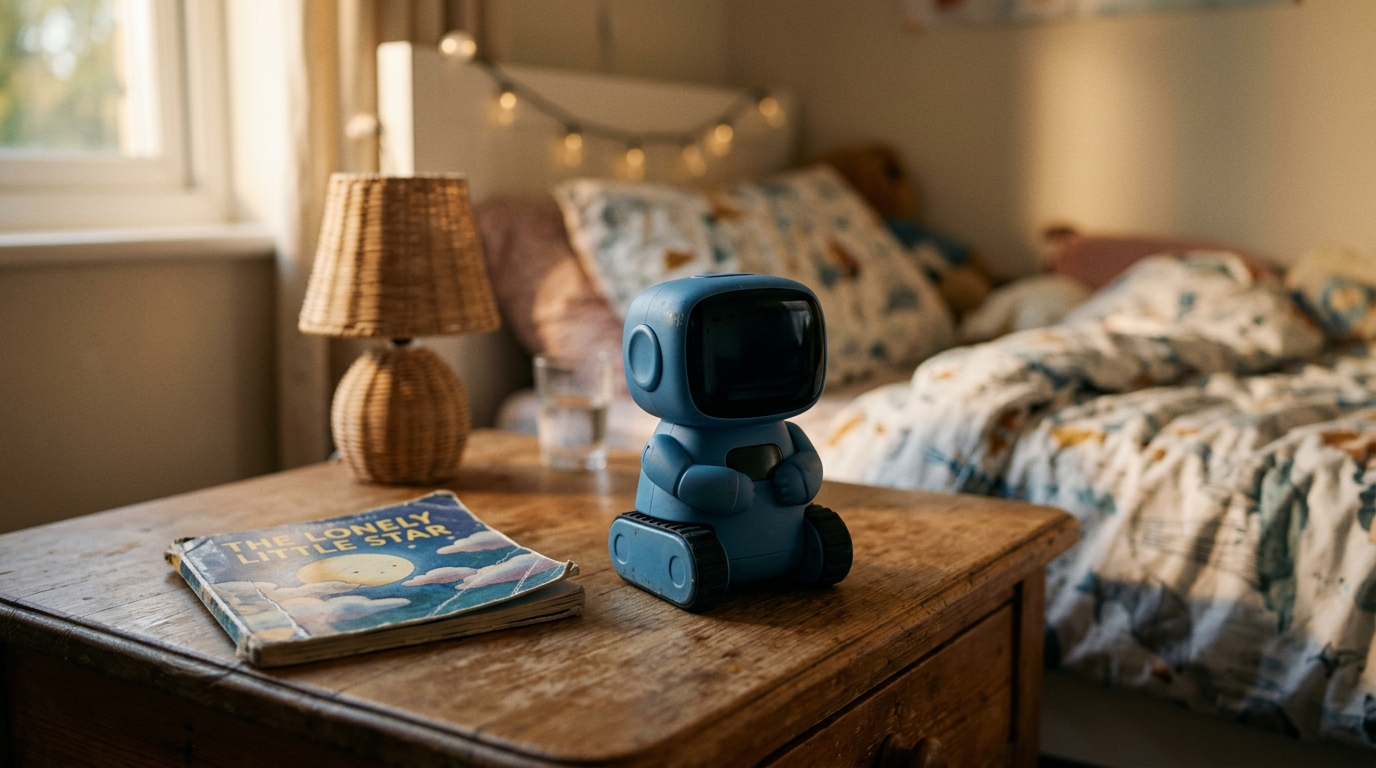
Eighteen months ago, the Moxie robot was the saddest story in consumer tech. Kids were crying on TikTok because their little blue friend had gone silent. Parents were stuck explaining death to a five-year-old using a robot as the stand-in. Most people filed Moxie away as a cautionary tale and moved on.
Then something strange happened. Moxie came back.
Not as a nostalgic relaunch trailer or a Kickstarter that never ships. A real company bought the rights, switched the servers back on, and started selling robots again in early 2026. If you typed “moxie robot 2026” into Google expecting another obituary, that’s not where the story is anymore.
So here’s the honest version — what the relaunch actually is, who’s running it, what you get for your money, where the landmines are buried, and whether a kid in your house should be talking to one of these things at all. I’ll also walk through what to do if you’ve got a dead Moxie in a closet, because that’s a different question with a different answer.
Quick answer: Yes, the Moxie robot is back in 2026. A new company, Moxie Robots, Inc., acquired the rights from the bankrupt Embodied and relaunched the $799 robot at $499. Existing owners can reactivate dead units through a new app. The catch: it’s still cloud-dependent, your old data didn’t carry over, and stock has been limited — so treat it as a fresh start, not a revival of the original.
Wait, didn’t the Moxie robot die? Quick recap
Short version: yes, it did. Embodied, the Pasadena startup behind Moxie, ran out of money in late 2024. A funding round collapsed when the lead investor walked at the last minute, and the company shut down. Because Moxie’s brain lived in the cloud, the robots went dark when the servers did — the lights officially went out on January 30, 2025. No refunds for most people. I covered the full story of the Embodied shutdown separately, and it’s worth reading if you want the whole timeline and why families were so gutted.
That piece ended on an open question: would anyone ever bring Moxie back? At the time, the answer was a shrug. Now we have a real one.
Who brought Moxie back in 2026?
The robot’s second life belongs to Moxie Robots, Inc., a separate company that acquired the rights to Moxie after Embodied folded. It is not the same outfit, not run by the same people, and not legally on the hook for anything Embodied promised. That distinction matters more than it sounds, and I’ll come back to it.
The founder is Kush Taneja, and his background is the most reassuring thing about this relaunch. He previously built FamPay, a teen debit-card company in India with millions of users and serious backers behind it, and he landed on the Forbes 30 Under 30 list. He’s described himself as the guardian of his younger sister, and he frames Moxie around helping kids get great at whatever “thing” they’re into. He has also said he answers customer messages personally — which, after the Embodied collapse, is the kind of small signal anxious parents actually notice.
None of that guarantees longevity. A passionate founder with a good track record is still a founder running a hardware company, and hardware companies are brutal. But it’s a meaningfully different starting point than a faceless acquirer flipping inventory.
AEO snippet: Moxie Robots, Inc., founded by FamPay creator Kush Taneja, acquired the Moxie robot rights after Embodied’s 2024 bankruptcy and relaunched it in early 2026. The new company is independent of Embodied and not liable for the original firm’s warranties, refunds, or data.
Moxie robot price in 2026 and what’s actually different
Moxie Robots reopened orders on February 1, 2026, listing the robot at $499 — down from the original $799. Stock was framed as limited, with the company being upfront that prices could climb as remaining inventory shrank. By mid-2026, new-unit availability had tightened to the point where the focus shifted toward supporting and reactivating existing robots rather than pushing constant new sales. If you see a brand-new Moxie listed, check the source carefully — demand has outrun supply more than once.
The bigger change isn’t the price. It’s the philosophy. Under the new team, a few things shifted:
- A clean-slate data policy. Your old conversations and mission progress from the Embodied era did not transfer. Every reactivated or new Moxie starts fresh and won’t remember anything from before. Privacy-wise that’s arguably healthier; emotionally, it means the bond your kid built in 2024 isn’t coming back with the lights.
- An app-first setup. Reactivation and onboarding now run through a dedicated Moxie app rather than the old parent portal. There’s even an app-based “Moxie on a screen” video-call mode — same character, no physical body — for iPhone and iPad.
- Honest framing about limits. The new team has been more direct about what Moxie is and isn’t, which is a refreshing change from the original’s glossier marketing.
Original Embodied Moxie vs 2026 Moxie: side by side
| Factor | Embodied (2020–2024) | Moxie Robots (2026) |
| Price | $1,500 → $799 | $499 (limited stock) |
| Company | Embodied, Inc. (shut down) | Moxie Robots, Inc. |
| Your old data | — | Not transferred; starts fresh |
| Setup | Parent app / portal | New Moxie app, activation code |
| Cloud dependent? | Yes | Still yes |
| Old-unit revival | Bricked on shutdown | Reactivation rolling out |
| Warranty honored? | Voided at shutdown | New warranty on new purchases |
| Liability for Embodied terms | n/a | None — separate company |
The catch nobody puts in the headline
This is the part where I earn your trust by not selling you anything. The relaunch is genuinely good news, but it doesn’t erase the structural problem that killed Moxie the first time.
It’s still a cloud robot
Moxie’s intelligence — the conversation, the personality, the responsiveness — still leans on cloud processing and large language models. That’s what makes it feel alive, and it’s also what makes it fragile. If Moxie Robots, Inc. ever hits the same funding wall Embodied did, the same thing can happen again. A new owner doesn’t change the physics of the business model; it just resets the clock.
I’m not saying that to be grim. I’m saying it because you’re handing this device to a child who will bond with it, and you deserve to know the bond sits on top of a company’s balance sheet.
The “5% might be bricked” footnote
If you own an old Moxie, there’s a small chance — the company estimates around 5% — that your specific robot missed a critical update Embodied pushed back in 2022, which can block reactivation. Most units come back fine. A few simply won’t, and there’s no clean fix when that happens.
No spare parts pipeline
This is a refurbished-inventory operation, not a factory spinning out new hardware. Chargers and replacement parts aren’t freely available; owners have had to source compatible chargers themselves. Plan around the idea that the physical robot is effectively irreplaceable.
Reality check: Buying a 2026 Moxie means buying into the same cloud dependency that failed once already — just with a more transparent operator. That’s an improvement, not a guarantee. Go in expecting a device that’s wonderful while it’s supported and silent if support ends.
“I already own a dead Moxie” — your two real options
If there’s a lifeless Moxie in a drawer, you don’t have to buy anything. You have two paths, and they suit very different people.
Option 1: Official reactivation (easiest)
Moxie Robots is gradually re-enabling old units through its app. The flow looks like this:
- Download the Moxie app from the App Store and create an account.
- Power on the robot and connect it to Wi-Fi.
- Complete onboarding in the app and request an activation code.
- Apply the code to bring Moxie back online — as a fresh personality, not your old one.
This is the right route for almost everyone. It’s official, it’s simple, and it doesn’t require you to touch a command line. The trade-off is that you’re back on the cloud and back to depending on the company.
Option 2: OpenMoxie self-hosting (for tinkerers)
There’s also a community-built server called OpenMoxie, originally seeded by former Embodied engineers, that lets a Moxie run on hardware you own. You point the robot at a little server on your home network instead of a company’s cloud. It’s the most future-proof option because it can’t be switched off by a bankruptcy — but it asks more of you.
In broad strokes, a self-hosted setup involves:
- A computer on your home Wi-Fi — a PC, Mac, Linux box, or even a Raspberry Pi 5.
- Docker and Docker Compose installed, which run the OpenMoxie server and its messaging broker.
- Your own OpenAI API key for the conversational brain (and optionally a Google key for better speech-to-text).
- A one-time over-the-air update on the robot so it can talk to a local server instead of the dead cloud.
- Configuration through OpenMoxie’s web dashboard, where you set the schedule, pick content, and even write simple custom conversations.
Fair warning: this is a hobbyist project, not a polished product. Some newer content modules from the original Moxie aren’t replicated, there’s no parent app, and if Docker and API keys make your eyes glaze over, you’ll have a rough afternoon. For a technical parent, though, it’s the version of Moxie that nobody can take away.
My take: If you just want your kid’s robot working again, use official reactivation. If you care more about never losing it again than about polish, learn OpenMoxie. Don’t start with self-hosting if you’ve never opened a terminal — try the app first, and keep OpenMoxie as your insurance policy.
Is the Moxie robot worth it in 2026?
Depends entirely on who it’s for. Moxie was always strongest as a structured social-emotional coach for kids roughly aged 5 to 10 — especially neurodivergent kids who benefit from a patient, judgment-free way to rehearse conversations. On that specific job, very few products do what Moxie does. The expressive face, the eye contact, the guided missions about empathy and self-regulation — that combination is rare.
Where it gets shakier is value and durability. $499 is a lot for a device whose long-term survival you can’t fully control, and the emotional stakes are higher than with a normal toy. A kid who loves Moxie really loves Moxie, which is exactly why a second shutdown would hurt.
The honest pros and cons
| Pros | Cons |
| Genuinely effective for SEL and neurodivergent kids | Still cloud-dependent — same risk that killed it once |
| Cheaper than ever at $499 | Limited, fluctuating stock |
| More transparent operator this time | Old data and bonds don’t carry over |
| Existing dead units can be revived | ~5% of old units may not reactivate |
| App-based Moxie adds flexibility | No real spare-parts supply |
| Self-host option (OpenMoxie) exists | High emotional stakes if support ends again |
If you’re the kind of buyer who scrutinises cloud dependence before committing — the same instinct that pays off with the AI tools we actually use day to day — you’ll go in with the right expectations. Moxie is worth it for the right child, with eyes open, and a backup plan for the day support might lapse.
Best Moxie robot alternatives for 2026
Maybe you want the social-emotional benefit without betting on one fragile company. Maybe Moxie sells out before you decide. Either way, here’s an honest map of the alternatives — none of them is a perfect Moxie clone, because Moxie’s exact niche is genuinely unusual.
| Robot | Best for | Watch out for |
| Miko 3 / Miko Max | Conversational learning + games, ages 5–10 | Subscription for full content; busier, less calm than Moxie |
| Loona | Playful ChatGPT-powered companion, pet energy | Entertainment-first, not an SEL curriculum |
| Eilik | Cheap desk companion, emotional reactions | Tiny, toy-like; no learning program |
| Wonder Workshop Dash | Screen-free coding & STEM, ages 6–11 | Coding focus, not emotional coaching |
| Sony Aibo | Lifelike robot ‘pet’, empathy & responsibility | Expensive; annual subscription |
A pattern worth noticing: almost every option here carries a subscription or a cloud tie of its own. That’s the whole category now. The smart move is the same discipline you’d use weighing AI agents that cut real costs — read the fine print on what keeps working if the company disappears, and price that risk in before you fall for the demo video.
Common mistakes people make buying a Moxie in 2026
- Assuming it’s the same company. It isn’t. Embodied’s warranties, policies, and promises don’t apply to Moxie Robots, Inc. Read the new terms as if it’s a brand-new product, because legally it is.
- Expecting old data to return. It won’t. If your child’s attachment was tied to specific memories Moxie had, prepare them for a clean slate rather than a reunion.
- Buying a ‘cheap’ Moxie from a random reseller. A used unit with no path to activation is a paperweight. Confirm it can be reactivated or self-hosted before money changes hands.
- Ignoring the cloud question. If a working Moxie matters that much, set up OpenMoxie as a fallback while the official servers are still up. Don’t wait until there’s an emergency email.
- Treating it as a babysitter. Moxie is a tool for guided practice, not a substitute for human interaction. The families who got the most out of it used it alongside real conversation, not instead of it.
Expert tips for getting the most out of Moxie
- Reactivate before you need to. If you own an old unit, start the app reactivation now rather than the night before a birthday. Rollouts can be gradual.
- Use the app chat for important info. The new Moxie reportedly retains details better when you type them in the app than when you speak — voice picks up background noise that muddies what it remembers.
- Correct it like you would a kid. Moxie improves with feedback. Guiding and correcting it shapes how well it fits your family over time.
- Keep your recovery details safe. Whatever activation codes or account info the app gives you, store them somewhere you’ll find them in a year. Future you will be grateful.
- Have the hard conversation early. Be honest with kids that Moxie is a robot and could one day stop. It sounds heavy, but it’s far kinder than a surprise goodbye.
Frequently asked questions about the Moxie robot in 2026
Is the Moxie robot back in 2026?
Yes. After Embodied shut down in 2024, a separate company called Moxie Robots, Inc. acquired the rights and relaunched the robot in early 2026 at $499, with existing units becoming reactivatable through a new app. Availability has been limited, so it sells out in waves.
How much does the Moxie robot cost now?
The 2026 Moxie relaunched at $499, down from the original $799. Stock is limited and the company has signaled prices can rise as inventory falls, so the exact price you see may vary or be temporarily unavailable.
Can I reactivate my old Moxie robot?
In most cases, yes. Download the Moxie app, connect the robot to Wi-Fi, complete onboarding, and request an activation code. Around 5% of old units that missed a 2022 Embodied update may not reactivate, and your previous data won’t carry over.
Will my child’s old conversations come back?
No. Moxie Robots, Inc. did not transfer data from Embodied. Every reactivated or new robot starts fresh with no memory of past interactions. It’s a clean slate for both privacy and personality.
Is the new Moxie company related to Embodied?
No. Moxie Robots, Inc. is an independent company led by Kush Taneja and is not affiliated with Embodied or liable for its previous terms, refunds, or warranties.
Is the Moxie robot still cloud-dependent?
Yes. Its conversational intelligence still relies on cloud processing, which means the same shutdown risk exists in theory. The community-built OpenMoxie server is the only way to run a Moxie fully on your own hardware.
What is OpenMoxie and is it safe?
OpenMoxie is a community project that lets a Moxie run on a local server you control, using your own OpenAI API key. The original on GitHub is widely used, but unrelated copycat sites exist, so stick to the well-known maintained version and expect a technical setup.
Is Moxie good for autistic children?
It was one of Moxie’s strongest use cases. Therapists and parents reported real gains in emotional regulation and conversation for some neurodivergent kids. Results vary by child, and it should support — not replace — human interaction and professional guidance.
What are the best alternatives to Moxie?
Miko is the closest for conversational learning, Loona for playful companionship, and Wonder Workshop Dash for screen-free coding. None replicate Moxie’s social-emotional curriculum exactly, and most carry their own subscriptions or cloud dependence.
Should I buy a Moxie robot in 2026?
Buy it if you have a 5–10-year-old who’d benefit from structured social-emotional practice, you understand the cloud risk, and you’re willing to set up a fallback. Skip it if you want a guaranteed-forever device or a simple offline toy.
Final verdict: a real second chance, with the same fine print
The Moxie comeback is the rare tech sequel that’s actually worth caring about. A capable founder bought a product people genuinely loved, cut the price, switched the lights back on, and started bringing dead robots back to life. For the families who spent 2025 grieving a silent robot, that’s not a small thing.
But I’d be doing you a disservice if I let the warm story paper over the structure underneath. This is still a cloud-dependent device sold by a young hardware company, and the exact failure mode that broke it once hasn’t been engineered away — it’s been re-funded and re-timed. Buy the 2026 Moxie for the right kid, with clear eyes, and set up OpenMoxie as your seatbelt. Do that, and you get the best of Moxie while protecting yourself from its one recurring flaw.
If you’re weighing other connected gadgets with the same buy-or-rent question — from Ray-Ban Meta smart glasses to Whoop vs Apple Watch — the rest of our reviews and comparisons apply the same no-hype test: what happens to this thing if the company behind it disappears tomorrow?